
Blog
Dental hygiene tips for healthy teeth & gums
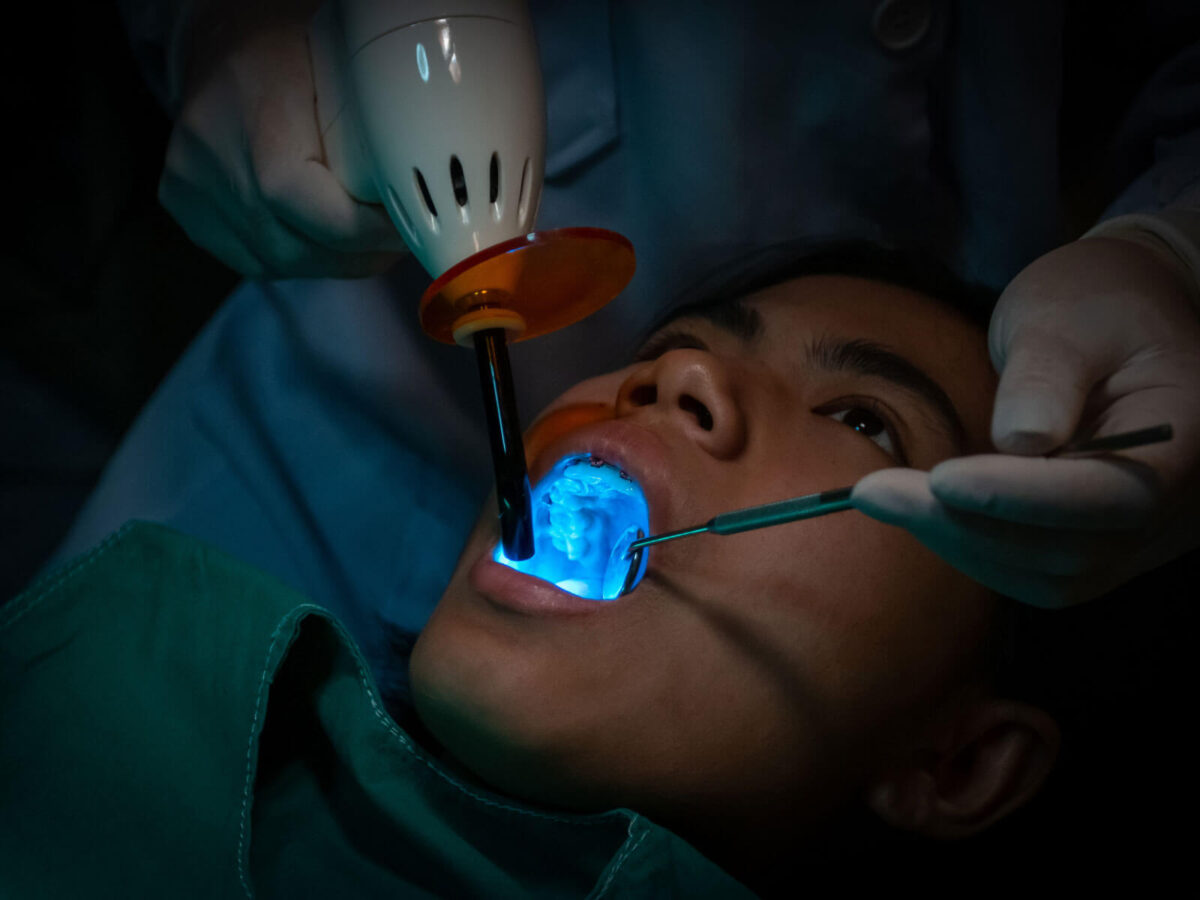
What Is Biomimetic Dentistry?: A Guide to Tooth-Preserving Restorative Techniques and Benefits
My coworker went in for a filling replacement, expecting the usual routine. Her old dentist would drill out the failing filling, go a size up, and pack in new composite, something he’d already done twice on that same molar.
This time, a new dentist stopped her before the drill came out and wanted to try something else first.
That something else is biomimetic dentistry, a set of restorative principles built around one real question: how much of the actual tooth can be saved, instead of just replacing whatever’s damaged.
What Is Biomimetic Dentistry, Exactly
Bios means life. Mimesis means imitation. Put them together, and you get the Greek roots behind the term, which a PMC review traces directly, and the dental practice follows the same idea. A restoration is meant to copy how a real tooth behaves under a bite instead of just filling a hole and calling it done.
A standard filling usually removes some healthy tooth structure just to give the material somewhere stable to sit. Biomimetic dentistry skips that step where it can. Bonding technology got good enough that dentists stopped needing to carve out extra room just to hold a filling in place mechanically.
A windshield analogy comes up a lot in describing this to patients. One crack doesn’t mean replacing the whole windshield if the glass around it is fine. You work around the crack instead. Rough comparison, but it lands for most people.
Where Did This Approach Actually Come From
It isn’t new. Adhesive dentistry techniques go back to the 1980s, and the same PMC review pushes some of the underlying biomimetic concepts back even further, into general biomimicry research well outside dentistry entirely.
What actually made it practical for teeth was bonding strength. Once adhesives could attach composite to dentin reliably, the old justification for cutting away healthy structure just to anchor a filling stopped holding up. Biomimetic dentistry didn’t spread through dental schools all at once, either. Some programs still haven’t fully adopted it.
What Techniques Actually Fall Under Biomimetic Dentistry
Four techniques show up constantly in the research behind biomimetic dentistry.
Selective caries removal. Instead of drilling out every trace of softened dentin, only the actively infected layer near the top gets removed. Deeper dentin closer to the nerve stays in place, avoiding unnecessary exposure of the pulp.
Layered bonding. Composite goes in thin, one layer at a time, rather than packed in as a single mass. This cuts down on shrinkage during curing, which is what tends to create the tiny gaps where bacteria work their way back under a restoration months later.
Adhesive bonding. A PMC review on minimally invasive restorative techniques calls bonding strength the actual engineering shift that made the rest of this possible, strong enough that mechanical retention isn’t doing most of the work anymore.
Pulp preservation. When decay sits close to the nerve, biomimetic protocols try to keep the pulp alive instead of moving straight to a root canal. A systematic review and meta-analysis in PMC on pulp capping biomaterials found decent clinical success with that approach, on teeth that older protocols would have sent straight to endodontic treatment.
Does Any of This Actually Work Better Long Term
It depends on what’s being measured. A PMC study on restoring root-canal-treated teeth notes that preserving tooth structure can extend a tooth’s life even when the restoration itself eventually fails, which is a different kind of success than most people expect from a filling. The same study is upfront that long-term data on biomimetic dentistry specifically is still limited, since the field hasn’t been around long enough for decades-long outcome studies.
Avoiding a root canal has its own payoff. A tooth that keeps its nerve tends to hold up better over time than one capped with a crown after root canal treatment. Cosmetically, it’s also a step up, since layered composite mimics the color shifts of real enamel better than older, flatter filling materials did, which matters more on a front tooth than a molar nobody sees.
A dentist experienced with these techniques still has to weigh each case individually, and that decision looks different depending on how much of the original tooth is left to work with.
Can a Root-Canaled Tooth Still Benefit From This
A root-canaled tooth loses its nerve, its blood supply, and a fair amount of internal structure just from the procedure itself. What gets built back on top of it plays a bigger role in the tooth’s future than most patients realize.
A PMC review on restoring endodontically treated teeth cites a retrospective study finding that a typical composite or amalgam buildup carried a 2.29 times greater likelihood of eventual extraction compared to a full-coverage crown, 11.6 percent versus 5.7 percent in that dataset.
The same review found that dentists trained in biomimetic dentistry leaned more toward preserving remaining structure and reinforcing it properly, rather than defaulting to whichever restoration was fastest to place.
A root canal doesn’t automatically lead to extraction down the line. What happens at the next appointment tends to matter just as much.
What’s the Catch
Time and money, mostly, and they’re connected. Layering composite and doing careful adhesive bonding takes longer in the chair than packing in a standard filling, and that extra time shows up on the bill.
Not every office offers biomimetic dentistry either. It usually isn’t baked into standard dental school training, so it means a dentist sought out extra certification on their own. Insurance is a mixed bag too. Some plans process it under a normal filing code. Others treat it as a specialty procedure and pay out less. Worth a phone call before assuming either way.
Is the Research Behind This Actually Solid
Mixed. The bonding science is well established. Adhesive strength between composite and dentin has decades of data behind it, and nobody disputes that part.
Where it gets thinner is long-term outcome data tied specifically to full biomimetic dentistry protocols, as opposed to composite restorations generally. A systematic review comparing amalgam and composite restorations put median composite survival around 11 years, against roughly 16 years for amalgam, but that’s composite research broadly, not biomimetic technique specifically. The protocol itself is still fairly new in research terms.
Each technique holds up on its own. The combined long-term picture, done at scale, over decades, is still catching up.
Who Actually Benefits Most From Biomimetic Restorative Techniques
Bigger cavities benefit the most, the kind that would’ve meant real extra drilling under the old approach. Cracked teeth, too, where whatever structure survived the crack is worth protecting rather than shaving down further.
Younger patients get a different kind of benefit from biomimetic dentistry. Saving the pulp now can mean decades fewer restorations and replacements down the line.
A small, shallow cavity surrounded by plenty of healthy enamel doesn’t need any of this. A standard filling, done in twenty minutes, works fine without the extra cost or wait.
FAQ
Is this the same as holistic dentistry?
No, though the two sometimes overlap in the same office. Holistic dentistry is more about materials and broader health philosophy. Biomimetic dentistry is specifically about saving tooth structure and mechanics.
Does it cost more than a regular filling?
Usually, yes. It takes more chair time and more careful material handling.
What if the tooth already had a root canal? Can it still be saved this way?
Sometimes, depends on how much tooth is left. A dentist can usually tell from an X-ray.
Any way to check if my dentist does this before I bring it up myself?
Not really. Someone at the practice will know, the front desk or the dentist, but there’s no way around asking directly.
Conclusion
Ask around, and most people have never heard the term biomimetic dentistry, even people who’ve had plenty of dental work done. That’s not because it’s fringe. It’s because it hasn’t been marketed the way whitening or Invisalign has.
If a filling or crown is coming up, ask whether it applies to your case before the drill comes out, not after. It’s a real question worth five minutes at a consult, and sometimes that conversation changes what happens to the tooth. Ask specifically what gets preserved and what doesn’t, and get a real answer before signing off on anything.

